Bachelor of Science in Neuroscience
Where Psychology and Biology Intersect
Program Overview
The Bachelor of Science in Neuroscience at Bellarmine is an interdisciplinary degree between the departments of Biology and Psychology that prepares students for a range of graduate and professional programs, including medical school, clinical neuroscience, neuropsychology, physical therapy, and biomedical graduate programs.
The Neuroscience major is designed to establish a broad foundation and understanding of nervous system development and function at all levels from molecules to behavior, and to prepare undergraduates for graduate programs and careers in research, medicine, rehabilitation, and clinical work related to nervous system function and dysfunction.
Why study Neuroscience at Bellarmine?
At Bellarmine, students have the option to choose one of three tracks based on their career path of interest. The Medical School track is designed for students interested in applying to medical school. The Behavioral Neuroscience Graduate School track is for students who want to pursue graduate education in clinical or behavioral neuroscience. And the Physical Therapy track is for students interested in applying to a Doctorate in Physical Therapy program.
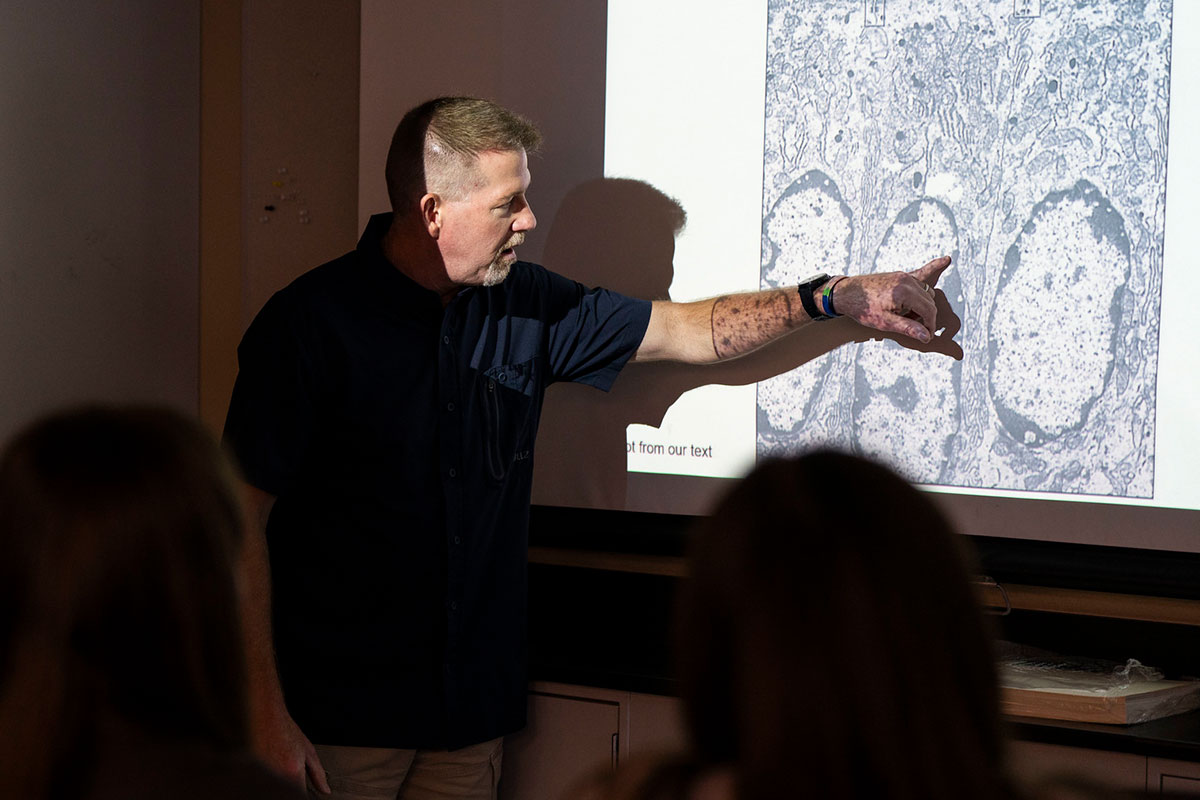
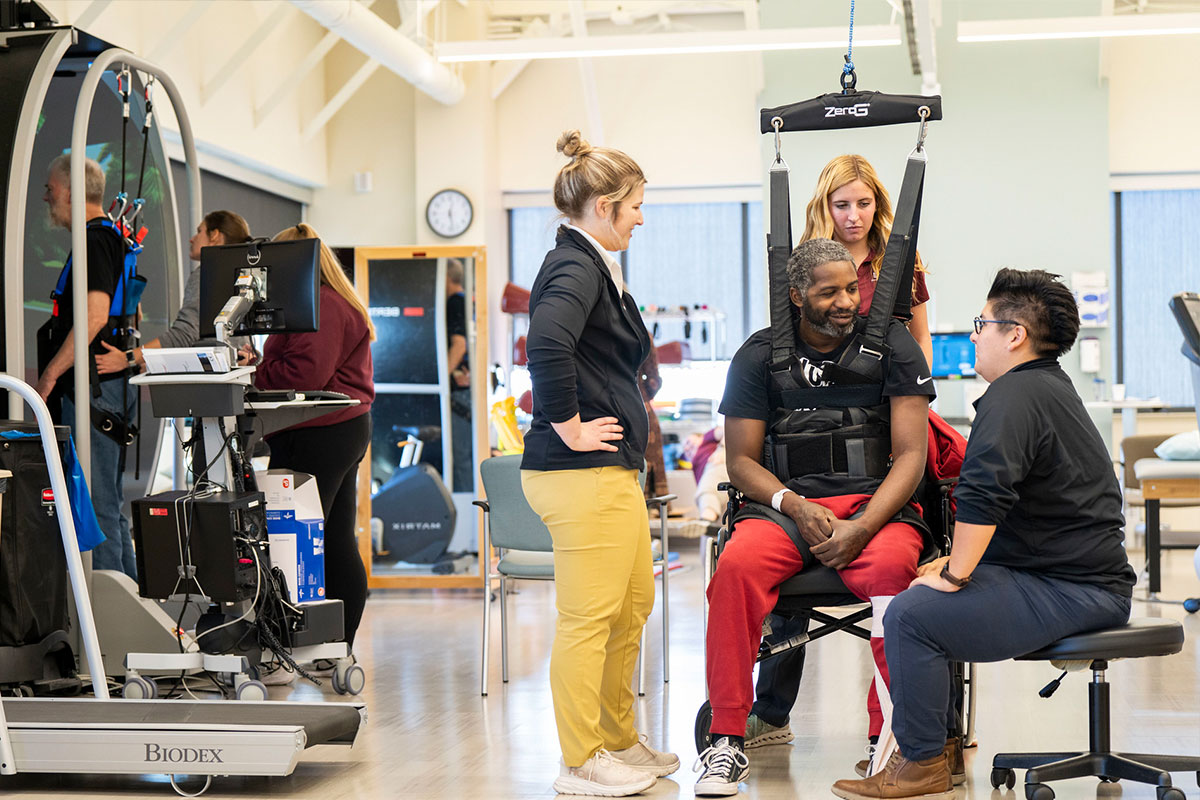
Choose A Track that Fits Your Goals
Students have the option to choose one of three tracks based on their career path of interest, including medical school, behavioral neuroscience graduate study, or physical therapy.
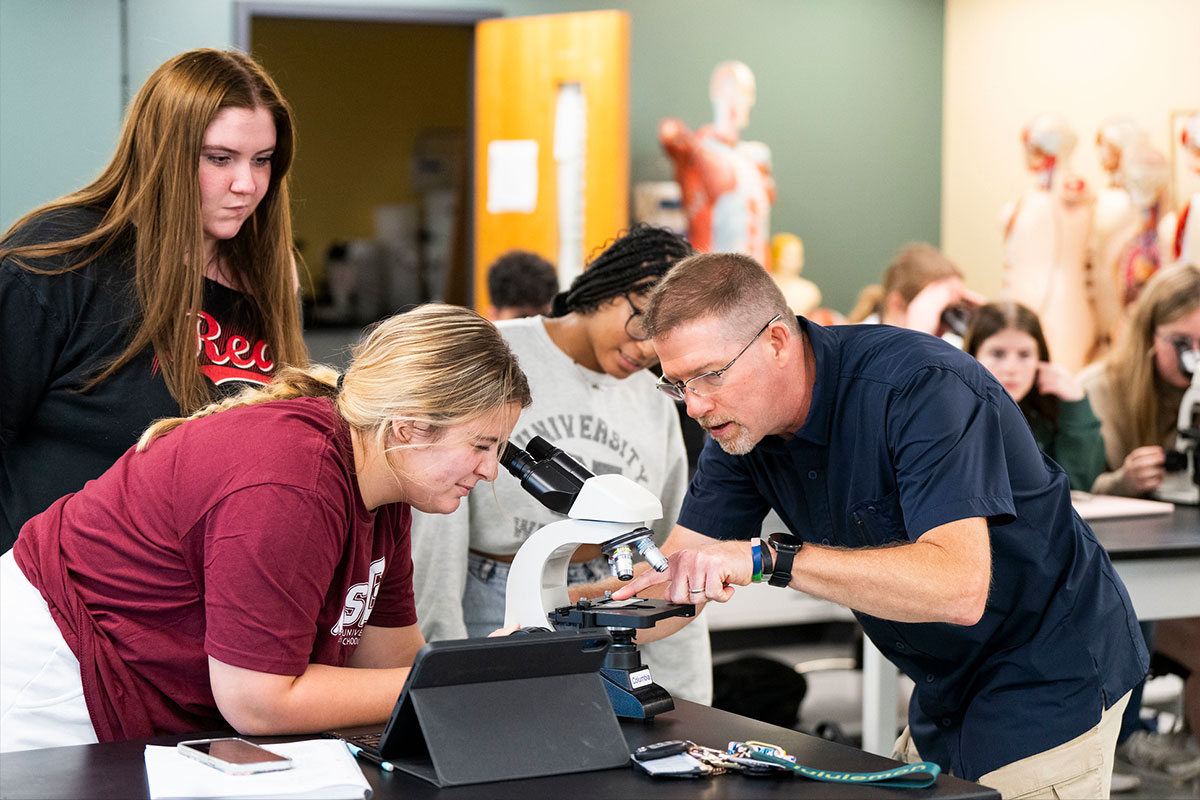
Interdisciplinary Preparation
The B.S. in Neuroscience is an interdisciplinary degree between the departments of Biology and Psychology that prepares students for a range of graduate and professional programs and careers related to nervous system function and dysfunction.
3
Career Path Tracks
50+
Study Abroad Opportunities
12:1
Student-to-Faculty Ratio
The popularity and importance of neuroscience has grown significantly in the last 20 years, especially as our understanding of the brain has increased and we have more ways to study how the nervous system works, develops, malfunctions, and how it can be repaired. Due to its multidisciplinary nature, there are numerous careers in the neuroscience field, including careers in medicine, other health-related professions, clinical neuropsychology, and academia.
According to the U.S. Bureau of Labor Statistics, jobs for medical scientists, including neuroscientists, are growing faster than the national average for all occupations. Growth in the jobs for physicians is projected to be 4%, which is as fast as average; growth in the jobs for physical therapists is projected to be 18%, which is much faster than average; and jobs for neuropsychologists are projected to grow 11% between 2018-2028.
For course details, see the Neuroscience program page in the Bellarmine University course catalog.
Freshman Year
- PSYC 103 (3 hours)
- CHEM 103* (4 hours)
- HIST 116 OR 117* (3 hours)
- BU 100* (1 hour)
- ENGL 101* (3 hours)
- TOTAL: 14 hours
- BIOL 130 (4 hours)
- CHEM 104 (4 hours)
- PSYC 240 (3 hours)
- IDC 101 (3 hours)
- Elective (3 or 4 hours)
- TOTAL: 17-18 hours
Sophomore Year
- PSYC 203 (3 hours)
- BIOL 231 (3 hours)
- CHEM 205 (3 hours)
- NEUR 201 (3 hours)
- TOTAL: 14 hours
- BIOL 240 (4 hours)
- MATH 205 (4 hours)
- English Literature 200-level* (3 hours)
- PHIL 101* (3 hours)
- Elective (3 or 4 hours)
- TOTAL: 17-18 hours
Junior Year
- Selected BIOL/BMB* (4 hours)
- PHYS 201 (4 hours)
- Elective (3 or 4 hours)
- Elective (3 or 4 hours)
- TOTAL: 14-16 hours
- BIOL/BMB/PSYC 200 or above (3 or 4 hours)
- PSYC 313 (3 hours)
- THEO 200* (3 hours)
- Elective (3 or 4 hours)
- Clinical/Research/Internship (1-3 hours)
- TOTAL: 13-17 hours
Senior Year
- NEUR 420 (3 hours)
- PHIL 301* (3 hours)
- Fine Arts* (3 hours)
- Theology* (3 hours)
- Electives (3 or 4 hours)
- TOTAL: 15-16 hours
- NEUR 430 (4 hours)
- IDC 401* (3 hours)
- Elective (3 or 4 hours)
- Elective (3 or 4 hours)
- TOTAL: 13-15 hours
Minimum Total Credits for this Degree: 120
Medical School Track (Total 23-27 hours)
- MATH 117: Calculus I (4 hours)
- PHYS 202: College Physics II (4 hours)
- CHEM 206: Organic II (4 hours)
- SOC 101: Intro to Sociology (3 hours)
- BIOL 314: Vertebrate Physiology (4 hours)
- BMB 301: Biochem (BMB 302 strongly recommended) (4-8 hours)
Behavioral Neuroscience Grad School Track (Total 13 hours)
- PSYC 310: Research Methods I (4 hours)
- PSYC 311: Research Methods II (3 hours)
- PSYC 230: Psychology of Learning (3 hours)
- PHIL 416/426: Philosophy of Science/Knowledge (3 hours)
Physical Therapy Track (Total 15-16 hours)
- BIOL 108: Human A & P I (4 hours)
- BIOL 109: Human A & P II (4 hours)
- EXSC 240 or BIOL 300 or BIOL 314: (3 or 4 hours)
- PHYS 202: College Physics II (4 hours)
Students planning to study abroad should consult the International Programs Office and the College of Arts and Sciences Study Abroad liaison in their freshman year and coordinate their curriculum with the Neuroscience program director.
General education courses may be taken in semesters other than the ones listed above.
| Name | Title | |
|---|---|---|
| Sonja K. Bareiss, PT, Ph.D., MPT | Professor of Physical Therapy | sbareiss@bellarmine.edu |
| Paul J. Kiser, Ph.D. | Professor of Biology, Program Director | pkiser@bellarmine.edu |
| Christy D. Wolfe, Ph.D. | Professor of Psychology | cwolfe@bellarmine.edu |
Contact
Paul J. Kiser, Ph.D.
Program Director
pkiser@bellarmine.edu
(502) 272-8113
Take Your Next Step
Start your Bellarmine story. Request information today.
Request InformationCome to campus and see what Bellarmine hospitality is all about.
Schedule Your Visit