Dr. Martha L. Carlson Mazur
Dr. Martha L. Carlson Mazur
Professor of Environmental Studies F-T
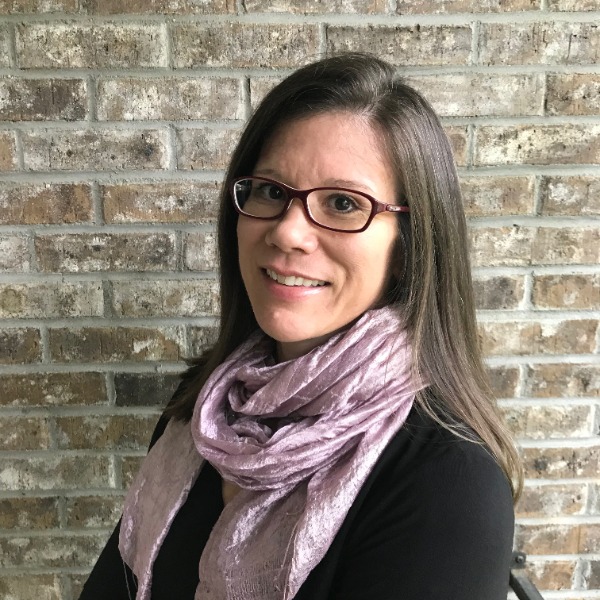
Biography
Holding a doctorate in Natural Resource Management from University of Michigan and having served as a research scientist at the US Geological Survey and a visiting professor at Boston College, Dr. Carlson Mazur is a lifelong learner and tenured full professor in the Department of Environmental Studies at Bellarmine. In her pedagogical research, she examines the effectiveness of community engagement for enhancing student learning. She also uses observational data and statistical analyses in her scientific research to study ecosystem process and function in transition zones between landscapes and aquatic ecosystems to understand human impacts and improve restoration effectiveness. In her teaching, she uses high-impact techniques to engage students in participatory learning and critical and creative thinking to foster effective environmental problem-solving. In her service, she supports people, organizations, and efforts that work for lasting change toward an equitable and just society and toward improving the natural world through environmental responsibility.
Beyond the Classroom
Outside of work, Dr. Carlson Mazur enjoys reading fiction, painting and drawing, gardening and landscaping with native plants, and camping and traveling with her family. Her favorite songs are Stand By Me by Ben E. King, Let It Be by The Beatles, and Heavenly Day by Patty Griffin.
Research and Scholarship
As an aquatic ecologist, Dr. Carlson Mazur uses observational data and statistical analyses to study ecosystem process and function in transition zones between landscapes and aquatic ecosystems in order to better understand human impacts and improve restoration effectiveness. As an educator, she uses community engagement to improve learning outcomes and teaching effectiveness in pedagogical research.
Current projects include: surveys of Environmental Science and Environmental Studies curricula in the US; using a community-engaged, social-constructivist model for teaching sustainable development; and the effect of riparian vegetation and hydrologic routing on water quality and habitat viability in two restored urban wetlands.
Education
Ph.D., Resource Ecology and Management: Aquatic Ecosystems, University of Michigan
M.A., Resource Ecology and Management: Aquatic Ecosystems, University of Michigan
B.A., Geology, Carleton College
Publications
- Caplow S, Guida R, Kyte Kirby B, Carlson Mazur ML, Druckenbrod D, Kloster D, Maximillian J, Muchnick B, Murphy D, Vasiliu D. 2026. Defining undergraduate environmental science: Current practices and curricula. Journal of Environmental Studies and Sciences. In review.
- Carlson Mazur ML, Waters C, Combs C. 2025. Developing community partnerships to supplement water-quality data and improve pedagogy related to urban watershed management. Journal of College Science Teaching. 54:525–534. doi:10.1080/0047231X.2025.2513314
- Carlson Mazur ML, Smith B, Bird B, McMillan S, Pyron M, Hauswald C. 2021. Hydrologic connectivity and land cover affect floodplain lake water quality, fish abundance, and fish diversity in floodplain lakes of the Wabash–White River basin. River Research and Applications. 38:160–172. doi:10.1002/rra.3888
- Carlson Mazur ML, Wilcox DA, Wiley MJ. 2020. Hydrogeology and landform morphology affect plant communities in a Great Lakes ridge-and-swale wetland complex. Wetlands. 40:2209–2224. doi:10.1007/s13157-020-01312-6
- Wilcox DA, Carlson Mazur ML, Thompson TA. 2020. Groundwater controls on wetland vegetation of a ridge-and-swale chronosequence in a Lake Michigan embayment. Wetlands. 40:2425–2442. doi:10.1007/s13157-020-01336-y
- Carlson Mazur ML, Schaeffer J, Granneman JE, Goldstrohm N, Fitzpatrick FA, Larson JH, Reneau PC, Kowalski KP, Seelbach PW. 2019. Seasonal patterns in hydrochemical mixing in three Great Lakes rivermouth ecosystems. Journal of Great Lakes Research. 45:651–663. doi:10.1016/j.jglr.2019.03.009
- Xu W, Collingsworth P, Bailey B, Carlson Mazur ML, Schaeffer J, Minsker B. 2017. Detecting spatial patterns of rivermouth processes using a geostatistical framework for near-real-time analysis. Environmental Modelling & Software. 97:72–85. doi:10.1016/j.envsoft.2017.06.049
- McLaughlin D, Carlson Mazur ML, Kaplan DA, Cohen MJ. 2014. Estimating effective specific yield in inundated conditions: A comment on a recent application. Ecohydrology. 7:1245–1247. doi:10.1002/eco.1522
- Carlson Mazur ML, Kowalski KP, Galbraith D. 2014. Assessment of suitable habitat for Phragmites australis (common reed) in the Great Lakes coastal zone. Aquatic Invasions. 9:1–19. doi:10.3391/ai.2014.9.1.01
- Carlson Mazur ML, Wiley MJ, Wilcox DA. 2014. Estimating evapotranspiration and groundwater flow from water-table fluctuations for a general wetland scenario. Ecohydrology. 7:378–390. doi:10.1002/eco.1356
- Larson JH, Trebitz A, Steinman AD, Wiley MJ, Carlson Mazur ML, Pebbles V, Braun H, Seelbach PW. 2013. Great Lakes rivermouth ecosystems: Scientific synthesis and management implications. Journal of Great Lakes Research. 39:513–524. doi:10.1016/j.jglr.2013.06.002
- Bourgeau-Chavez LL, Kowalski KP, Carlson Mazur ML, Scarbrough KA, Powell RB, Brooks CN, Huberty B, Jenkins LK, Banda EC, Galbraith DM, Laubach Z. 2013. Mapping invasive Phragmites australis in the coastal Great Lakes with ALOS PALSAR satellite imagery for decision support. Journal of Great Lakes Research. 39:65–77. doi:10.1016/j.jglr.2012.11.001
- Wiley MJ, Hyndman DW, Pijanowski BC, Kendall AD, Riseng C, Rutherford ES, Cheng ST, Carlson M, Tyler JA, Stevenson RJ, Steen PJ, Richards PL, Seelbach PW, Koches JM. 2010. A multi-modeling approach to evaluating climate and land use change impacts in a Great Lakes tributary river basin. Hydrobiologia. 657:243–262. doi:10.1007/s10750-010-0239-2
- Carlson M, Kowalski KP, Wilcox DA. 2009. Promoting species establishment in a Phragmites-dominated Great Lakes coastal wetland. Natural Areas Journal. 29:263–280. doi:10.3375/043.029.0306
- Wilcox DA, Kowalski KP, Hoare HL, Carlson M, Morgan HN. 2008. Cattail invasion of sedge/grass meadows in Lake Ontario: Photointerpretation analysis of sixteen wetlands over five decades. Journal of Great Lakes Research. 34:301–323. doi:10.3394/0380-1330(2008)34[301:CIOGMI]2.0.CO;2
- Wilcox DA, Sweat MJ, Carlson M, Kowalski KP. 2006. A water-budget approach to hydrologic restoration of a sedge fen. Journal of Hydrology. 320:501–517. doi:10.1016/j.jhydrol.2005.07.026
- Baker ME, Wiley MJ, Seelbach PW, Carlson M. 2003. A GIS model of subsurface water potential for aquatic resource inventory, assessment, and environmental management. Environmental Management. 32:706–719. doi:10.1007/s00267-003-0018-1
Honors and Accomplishments
- 2026 Women in Leadership Faculty Impact Award
- 2023 Student Government Association Professor of the Month Award, Bellarmine University
- 2022 Accessibility Resource Center Champion, Bellarmine University
- 2022 Diversity, Equity, and Inclusion Endorsement, Bellarmine University
- 2021-22 Diversity, Equity, and Inclusion Faculty Fellowship, Bellarmine University
- 2021 Dr. Doris A. Tegart Teaching Excellence Award, Bellarmine University
- 2016 Wilson Wyatt Fellowship of Academic Excellence Faculty Award, Bellarmine University
- 2015 Bellie Award for Global Sustainability, Bellarmine University
Professional Service
- Director, Degree Completion Program
- Coordinator, Credit for Prior Learning
- Co-Chair, Bellarmine Sustainability Committee
- Transfer Retention and Support Committee
- Faculty Farm Steward
- Professional Development Committee, Association for Environmental Studies and Sciences
- Mentorship Program, Association for Environmental Studies and Sciences